
Choosing between composite bonding and porcelain veneers for a chipped front tooth depends on the size of the chip, your budget, and how long you want the restoration to last. Composite bonding is a faster, more affordable option that can be completed in a single visit, while porcelain veneers offer greater durability and stain resistance but require more time and investment. At Perfect Dental, our providers evaluate your specific dental needs to help you decide which approach fits your goals and lifestyle.
Understanding Composite Bonding
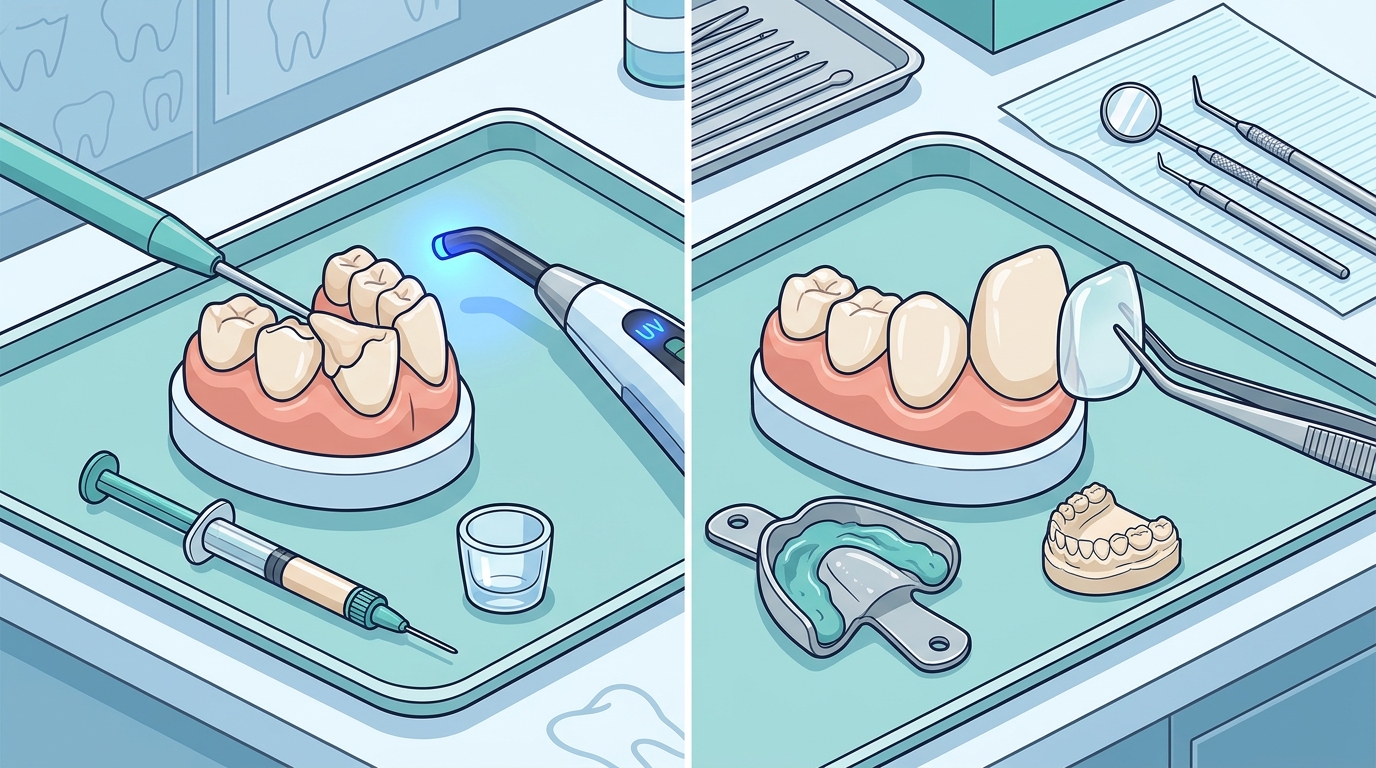
Composite bonding is a cosmetic dental procedure that uses a tooth-colored resin material to repair chips, cracks, or discoloration. The dentist applies the resin to the tooth, shapes it to match the natural contour, and hardens it with a special light. This method is minimally invasive, often requiring little to no removal of healthy tooth structure. It is an excellent choice for small to moderate chips where the structural integrity of the tooth remains largely intact.
Strengths and Limitations
The primary advantage of composite bonding is its efficiency and cost-effectiveness. Most patients can walk out of the office with a repaired tooth in under an hour. However, composite resin is not as durable as porcelain. Over time, it may chip, stain, or wear down, particularly if the patient grinds their teeth or consumes highly pigmented foods and drinks. It typically lasts between five and seven years, though this varies based on oral hygiene habits and lifestyle factors.
Understanding Porcelain Veneers
Porcelain veneers are thin, custom-made shells that cover the front surface of the teeth. Unlike bonding, which is applied directly to the tooth, veneers are fabricated in a dental laboratory and then bonded to the prepared tooth. This process usually requires two visits: one for preparation and impressions, and a second for placement. Veneers are designed to mimic the light-reflecting properties of natural enamel, providing a highly aesthetic and durable result.
Strengths and Limitations
Porcelain is a highly durable material that resists staining and wear far better than composite resin. Veneers can last 10 to 15 years or longer with proper care. The main limitations are the cost and the irreversible nature of the preparation. To fit the veneer, a small amount of enamel must be removed from the front of the tooth. Once this is done, the tooth will likely always require a restoration. This makes veneers a better fit for patients seeking a long-term, high-end cosmetic solution.
Comparison of Restoration Options
| Criteria | Composite Bonding | Porcelain Veneers |
|---|---|---|
| Procedure Time | Single visit | Two visits |
| Tooth Preparation | Minimal or none | Enamel removal required |
| Stain Resistance | Moderate | High |
| Expected Longevity | 5-7 years | 10-15+ years |
| Cost | Lower | Higher |
| Reversibility | Highly reversible | Irreversible |
Choosing the Right Option for Your Smile
The decision between bonding and veneers is not one-size-fits-all. It relies heavily on the extent of the damage and your personal priorities. If you have a small chip and want a quick, affordable fix, composite bonding is often the preferred route. If you are looking for a comprehensive smile makeover or have multiple teeth that need aesthetic correction, porcelain veneers may be the better investment. Your dentist will examine the chip, check the health of the underlying tooth, and discuss your expectations to guide you toward the most appropriate treatment.
Choose Composite Bonding If
- The chip is small or moderate in size.
- You want to preserve as much natural tooth structure as possible.
- You are looking for a lower-cost solution.
- You need the repair completed in a single appointment.
Choose Porcelain Veneers If
- The chip is large or involves significant tooth structure.
- You are concerned about long-term durability and stain resistance.
- You are considering treating multiple front teeth for a uniform look.
- You are prepared for a higher initial investment for a longer-lasting result.
Frequently Asked Questions
Can I eat normally after composite bonding?
Yes, you can eat normally after composite bonding, but you should avoid biting into very hard foods like ice, hard candy, or nuts for the first 24 to 48 hours to allow the bond to fully set. Long-term, you should still be mindful of using your front teeth to open packages or bite into hard objects, as this can cause the composite to chip.
Do porcelain veneers change the color of my natural teeth?
Porcelain veneers are custom-shaded to match your natural teeth or to achieve a specific whitening goal. They do not change the color of the underlying tooth, but they cover the front surface, effectively masking any discoloration. If you are planning to whiten your teeth, it is usually recommended to do so before getting veneers so the shade can be matched to your new, brighter smile.
Is it painful to get a chipped tooth fixed?
Most patients experience little to no discomfort during the bonding or veneer preparation process. If the chip is deep and close to the nerve, your dentist may use local anesthesia to numb the area. The procedure itself is generally comfortable, and any sensitivity after the visit is usually mild and temporary.
How do I maintain a bonded tooth or veneer?
Proper oral hygiene is key to the longevity of both restorations. Brush twice a day, floss daily, and attend regular dental cleanings. For composite bonding, using a straw for dark beverages and avoiding tobacco can help prevent staining. For veneers, avoiding habits like nail-biting or teeth grinding is essential to prevent chipping.
Can I switch from bonding to veneers later?
Yes, it is possible to replace composite bonding with porcelain veneers in the future. Since bonding is less invasive, it does not permanently alter the tooth structure in the same way veneers do. If you start with bonding and later decide you want the durability of porcelain, your dentist can remove the composite and prepare the tooth for a veneer.
Next Steps for Your Dental Care
Dealing with a chipped tooth can be stressful, but you have reliable options to restore your smile. Whether you choose the efficiency of composite bonding or the durability of porcelain veneers, the right choice depends on your individual dental health and aesthetic goals. The team at Perfect Dental is ready to help you navigate this decision with clear, honest guidance. We offer these services across our locations in Hyde Park, Taunton, Attleboro, and Methuen, ensuring you can find care that fits your schedule and needs.
To discuss your options, contact our team or schedule an appointment today. We look forward to helping you achieve a confident, healthy smile. Learn more: Contact Us Perfect Dental.